
The Short Answer
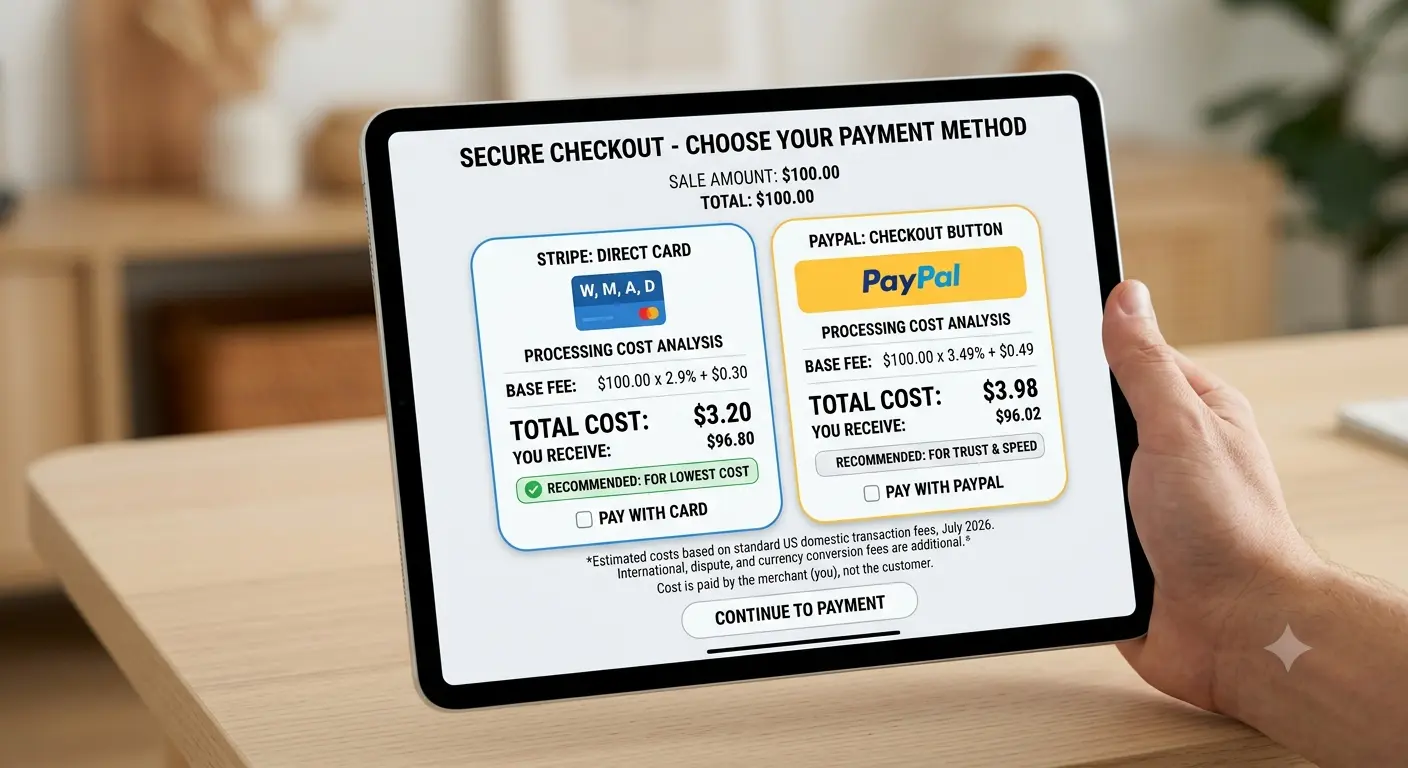
For a typical $50 digital sale, Stripe often has a small fee advantage. PayPal can still be valuable because customers trust it and may prefer using it.
The Basic Fee Math
Payment processors usually charge a percentage plus a fixed transaction fee. The impact becomes more noticeable as sales volume increases.
Stripe Example
Using a simplified example of 2.9% plus a $0.30 fee, a $50 sale would create about $1.75 in processing fees and leave around $48.25.
PayPal Example
Using a simplified example of 3.49% plus a $0.49 fee, a $50 sale would create about $2.24 in processing fees and leave around $47.76.
Small Differences Become Large
A difference of around $0.49 per transaction may seem small, but thousands of monthly sales turn small percentage differences into meaningful costs.
The Cheapest Option Is Not Always Best
Payment processors affect trust, checkout experience, refunds, fraud protection and payment acceptance rates.
Customer Preference Matters
Stripe provides a more integrated checkout experience. PayPal benefits from strong customer recognition and trust.
Digital Product Challenges
Digital sellers must consider instant delivery, fraud attempts, chargebacks, account access issues and international customers.
Currency Conversion
International sales can introduce additional costs. The final deposited amount matters more than the advertised processing rate.
International Customers
Offering different payment options may improve conversions, even if each payment method has slightly different fees.
Chargebacks and Disputes
Payment processors provide dispute systems, but fraud prevention and transaction quality matter as much as processing fees.
Subscriptions
Recurring digital businesses need billing tools, payment recovery and subscription controls. The best processor depends on business needs.
Checkout Experience
A fast, trusted and simple checkout can improve completed purchases more than saving a small amount per transaction.
When Stripe Makes Sense
Stripe is strong for businesses wanting custom checkout, international payments, subscriptions and advanced payment control.
When PayPal Makes Sense
PayPal is useful when customers already trust the platform or prefer PayPal payments.
Offering Both
Many digital businesses use Stripe for card payments and PayPal for customers who prefer that option.
Common Mistakes
Do not choose only by fees, ignore international costs, remove all backup payment options or make checkout unnecessarily complicated.
Final Verdict
Stripe often wins on transaction cost for direct digital sales, but PayPal can add value through customer trust. The best choice depends on actual customer behaviour.