
The artificial intelligence race is often described as a battle between AI models.
Who has the smartest chatbot?
Who created the most advanced language model?
Who achieved the highest benchmark scores?
But behind every AI system is another competition that is becoming just as important:
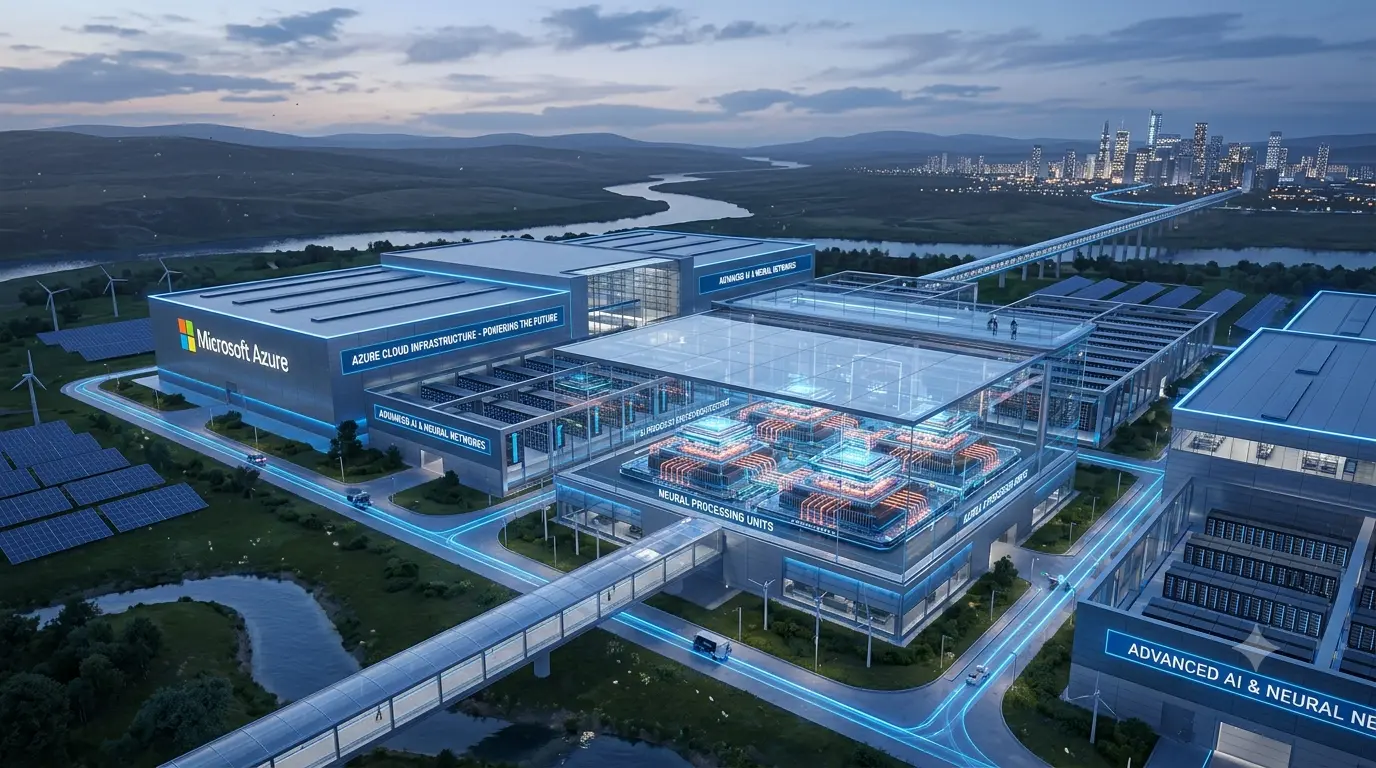
The race to build the infrastructure that powers AI.
Microsoft is expanding its AI infrastructure strategy by supporting multiple hardware platforms, including AMD solutions alongside NVIDIA technology.
The goal is not simply finding the fastest chip.
The goal is creating a flexible AI computing ecosystem that can support growing demand.
Why AI Infrastructure Has Become Critical
AI systems require enormous computing resources.
Every AI interaction depends on infrastructure working behind the scenes.
This includes:
- AI processors.
- Data centers.
- Networking systems.
- Storage.
- Cloud platforms.
As AI adoption increases, companies need more computing capacity.
Cloud providers like Microsoft Azure are investing heavily because businesses increasingly depend on AI services.
The challenge:
There are only a limited number of companies capable of supplying the hardware needed at global scale.
NVIDIA’s Dominance Created a New Industry Challenge
NVIDIA became the leader in AI computing through its GPUs and software ecosystem.
Its CUDA platform became a foundation for AI development.
Many researchers and companies built their systems around NVIDIA technology.
This created a strong advantage.
The more developers used NVIDIA tools, the more valuable the ecosystem became.
The more valuable the ecosystem became, the more companies chose NVIDIA hardware.
This cycle helped NVIDIA become the default choice for many AI workloads.
Why Microsoft Wants More Options
For a company operating one of the world’s largest cloud platforms, relying on one hardware supplier creates challenges.
Microsoft needs to provide AI computing capacity to thousands of businesses.
A broader hardware strategy provides several advantages.
More Supply Flexibility
AI hardware demand has increased dramatically.
Having multiple suppliers can help cloud providers manage availability.
Better Cost Control
Competition between hardware providers can create better pricing options.
Different Hardware for Different Workloads
Not every AI task requires the same type of processor.
Some workloads may prioritize:
- Maximum performance.
- Energy efficiency.
- Lower operating costs.
- Specific software compatibility.
Multiple options allow cloud providers to match hardware to customer needs.
AMD’s Role in the AI Infrastructure Market
AMD has been expanding beyond traditional processors.
The company is building a broader AI infrastructure portfolio that includes:
- Data center CPUs.
- AI accelerators.
- Networking technology.
- Software platforms.
AMD’s biggest opportunity is the growing demand for AI computing.
The market is expanding quickly enough that companies may not need to replace NVIDIA entirely.
A strong second ecosystem could still become a major player.
The AI Infrastructure Battle Is About More Than Chips
It is easy to focus only on processors.
But modern AI infrastructure depends on multiple layers.
Hardware
The physical processors performing calculations.
Software
The tools developers use to build AI applications.
Cloud Platforms
The systems that allow businesses to access AI computing.
Networking
The connections that allow thousands of processors to work together.
Winning the AI infrastructure race requires success across all these areas.
Why Software Remains the Biggest Challenge
AMD’s hardware improvements are only part of the story.
The larger challenge is developer adoption.
NVIDIA’s advantage comes partly from years of software development around CUDA.
Developers already know how to build AI applications using NVIDIA tools.
Competing platforms need to convince developers that switching is worthwhile.
This is why AI infrastructure competition is not only a hardware battle.
It is an ecosystem battle.
What This Means for Businesses
Most businesses will not directly purchase AI processors.
Instead, they will use AI through:
- Cloud platforms.
- Enterprise software.
- AI applications.
However, infrastructure decisions affect everyone.
More competition could lead to:
- Better AI availability.
- Lower costs.
- Faster innovation.
- More choices.
The hardware race happening inside data centers will eventually influence the AI tools companies use every day.
The Future of AI Infrastructure
The AI industry is moving toward a more diverse ecosystem.
The future may include:
- Multiple chip providers.
- Specialized AI processors.
- More open software platforms.
- Different infrastructure choices for different workloads.
The early AI boom was heavily associated with NVIDIA.
The next phase may involve a much wider group of companies.
The Practical Takeaway
Microsoft’s expanding AI infrastructure strategy shows an important shift.
The AI future will not only depend on who creates the best models.
It will depend on who can provide the computing systems needed to run those models at scale.
NVIDIA remains the market leader.
But companies like AMD are creating alternatives, and cloud providers want more flexibility.
The next AI battle will not be decided by a single chip.
It will be decided by the companies that build the strongest AI infrastructure ecosystems.