
Choosing a payment gateway is one of the most important decisions for any digital business. Whether you sell software licenses, online courses, digital downloads, AI tools, or memberships, your payment gateway directly affects customer experience, operating costs, and cash flow.
Many new businesses choose the first gateway they find. Later, they discover higher transaction fees, limited international support, or slower settlements.
There is no single “best” payment gateway for every business. The right choice depends on what you sell, where your customers are located, how you want to receive payments, and the features your business requires.
This guide compares the factors Indian digital sellers should evaluate before selecting a payment gateway.
What Is a Payment Gateway?
A payment gateway securely processes online payments between customers, banks, and merchants.
It handles tasks such as:
- Payment authorization
- Fraud screening
- Secure encryption
- Transaction processing
- Settlement of funds
For digital businesses, the payment gateway also plays a major role in customer confidence. A familiar and reliable checkout experience often increases completed purchases.
Consider More Than Transaction Fees
Many businesses focus only on the percentage charged per transaction.
While fees matter, they are only one part of the overall cost.
Also compare:
- Setup charges
- Annual fees
- Settlement speed
- International payment support
- Supported currencies
- Refund processing
- Chargeback handling
A gateway with slightly higher fees may save money elsewhere through better reliability or lower operational costs.
Domestic vs International Payments
If you sell only within India, your requirements may be relatively simple.
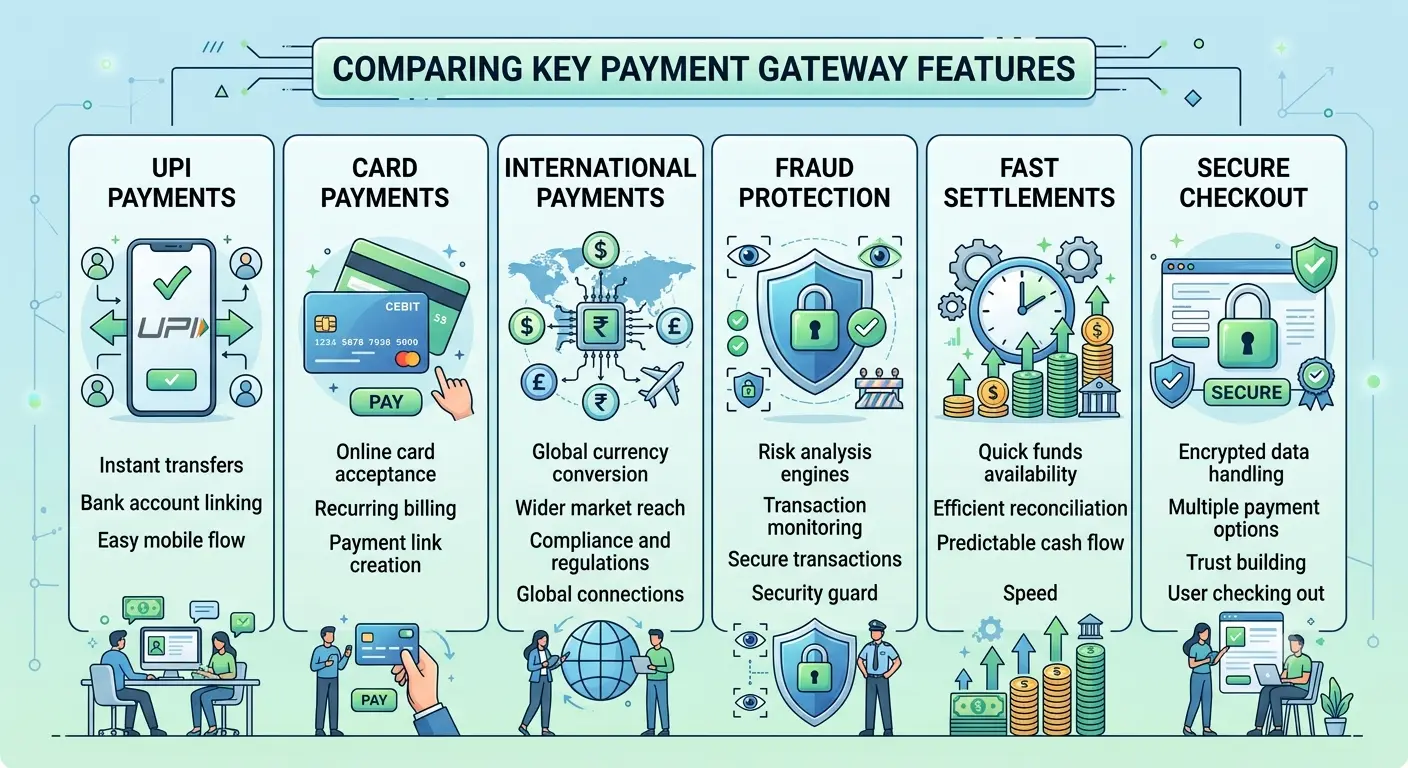
However, businesses serving international customers should verify support for foreign cards, multiple currencies, international settlements, currency conversion, and compliance requirements.
Payment Methods Matter
A modern gateway should ideally support credit cards, debit cards, UPI, net banking, mobile wallets, and international cards.
Settlement Times
Settlement speed affects cash flow and should be evaluated alongside fees.
Refund Handling
Understand refund workflows, fees, processing times, and customer notifications before choosing a provider.
Fraud Protection
Review features including risk scoring, monitoring, secure authentication, and suspicious activity detection.
Integration With Your Store
Check compatibility, plugins, APIs, mobile support, checkout customization, and subscription billing.
Customer Support
Evaluate support availability, documentation, technical resources, and response times.
Don’t Choose Based Only on Popularity
Assess your own needs instead of copying another business.
Common Mistakes
Choosing Only the Lowest Fees
Reliability and customer experience also affect profitability.
Ignoring International Expansion
Future growth may require broader payment capabilities.
Overlooking Refund Processes
Poor workflows increase support requests.
Not Testing Checkout
Complete test purchases before launch.
Frequently Asked Questions
Should every digital business accept international payments?
Not necessarily, but growth-focused businesses should prepare.
Do higher fees always mean better service?
No. Compare the complete feature set.
Can I use multiple payment gateways?
Yes. Many businesses do.
How often should payment gateways be reviewed?
Periodically as your business evolves.
Final Thoughts
A payment gateway influences customer trust, checkout experience, operational efficiency, and long-term growth. Choose based on overall value rather than fees alone.