
The Short Answer
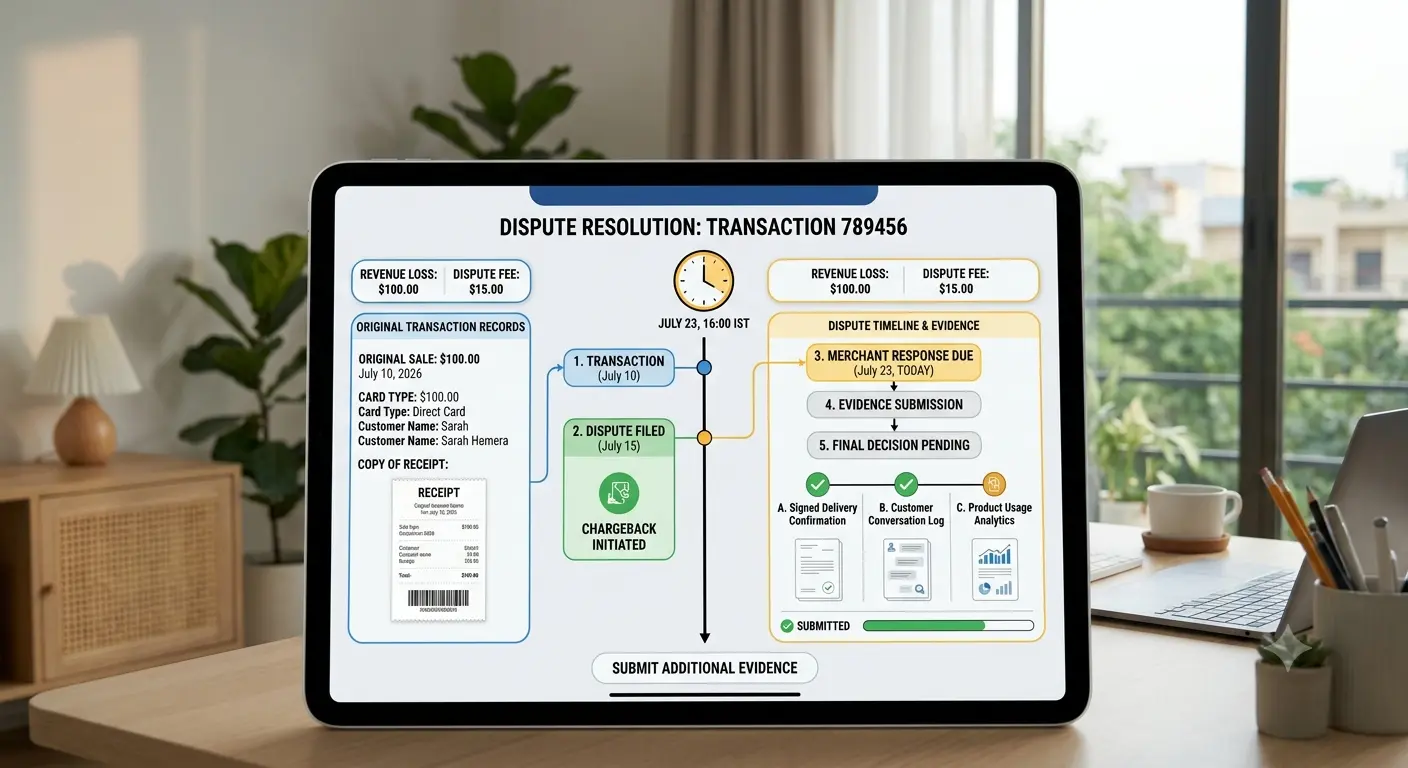
A chargeback is a payment dispute started by a customer through their bank or card provider. Sellers need strong records such as purchase details, delivery proof, customer activity and communication history.
Why Digital Goods Have More Challenges
Digital products are delivered instantly and cannot be physically recovered. Sellers need digital proof showing that the product was delivered and accessed.
What Happens After a Chargeback
The payment processor receives the dispute, notifies the seller, and may remove or hold the disputed amount while the case is reviewed.
Common Dispute Reasons
Common reasons include fraud claims, products not received, products not matching descriptions and duplicate payments.
Collecting Evidence
Strong evidence includes transaction records, delivery timestamps, account activity, licence activation records and customer communication.
Why Delivery Logs Matter
Automated digital delivery systems need records showing when payment succeeded, what was delivered and which customer received access.
Response Window
Sellers usually have a limited period to respond. Missing the deadline can result in automatically losing the dispute.
How Evidence Is Evaluated
Successful responses are clear, organised and based on verifiable records rather than explanations without proof.
Evidence That Helps Sellers
Customer information, payment records, digital delivery records and product acceptance details can strengthen a dispute response.
Why Sellers Lose Disputes
Many sellers lose because they cannot prove delivery, have unclear product descriptions, lack customer history or respond too late.
Preventing Chargebacks
Prevention starts before the sale. Clear product information, delivery confirmations, support options and fraud monitoring reduce disputes.
Refunds vs Chargebacks
Refunds are controlled by the seller, while chargebacks are controlled by banks and payment networks. Resolving issues directly can avoid extra costs.
Chargeback Ratios
Payment providers monitor dispute rates. Frequent disputes can lead to reviews, restrictions, higher costs or account problems.
30-Day Timeline
Days 1-3 involve notification, days 3-10 involve evidence collection, and days 10-30 involve review and decision processes.
Digital Seller Setup
A strong system should record customer details, payments, delivery times, downloads, licence activity and support communication.
Final Verdict
Chargebacks are a risk of digital commerce, but strong records reduce losses. The sale is not complete until the seller can prove what happened.