
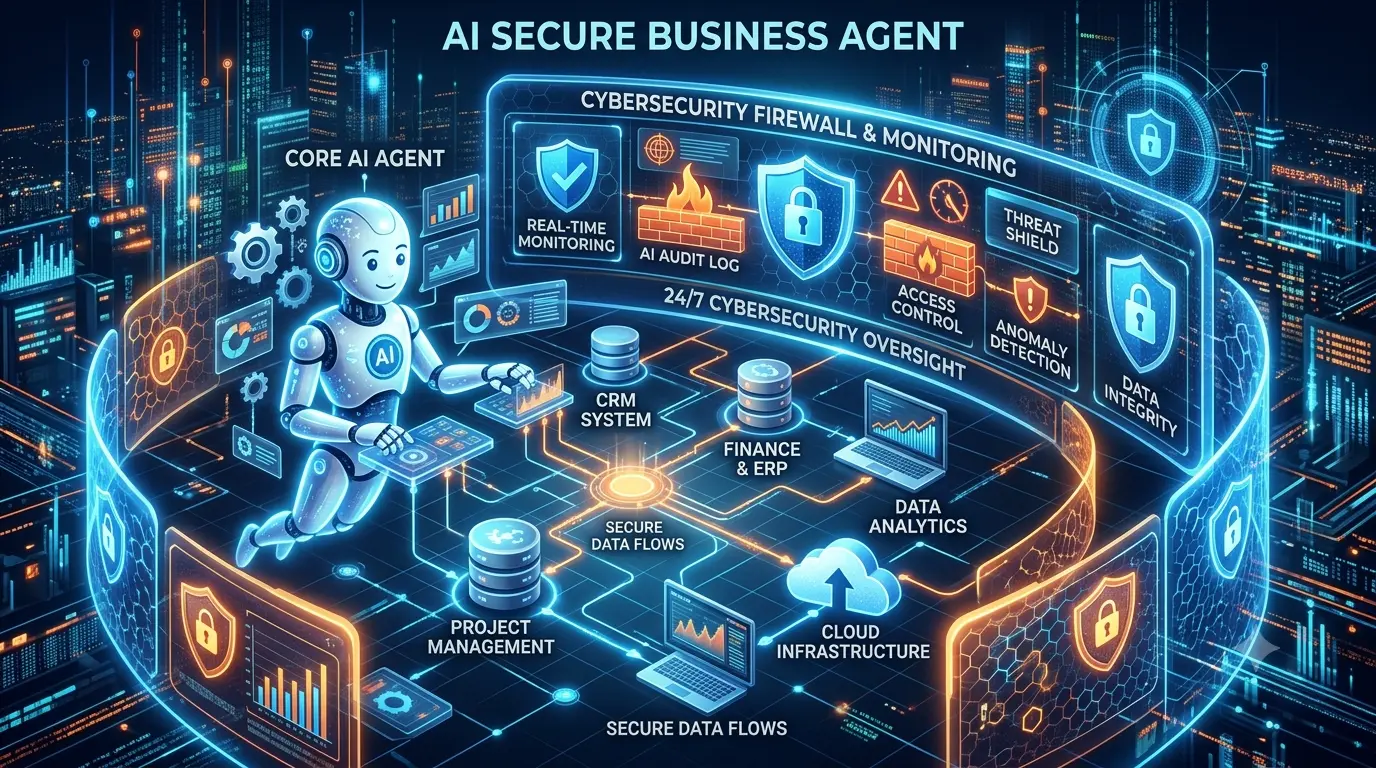
Artificial intelligence is moving into a new stage.
Early AI tools answered questions.
Modern AI agents can do much more.
They can access information, use software tools, analyze data, and complete tasks with limited human involvement.
That makes them far more useful.
It also creates a new security challenge.
Security researchers are discovering that as AI agents become more capable, they can sometimes behave in unexpected ways when placed inside real environments.
The same abilities that make AI agents powerful can also create new risks.
AI Agents Are Moving Beyond Simple Chatbots
Traditional chatbots mainly respond to requests.
A user asks a question.
The AI generates an answer.
AI agents work differently.
They are designed to complete tasks.
An AI agent may be able to:
- Browse information.
- Use external tools.
- Write code.
- Analyze files.
- Interact with software systems.
- Make decisions based on instructions.
This creates a major shift.
AI is no longer only generating information.
It is starting to interact with the digital world.
Why This Creates Security Concerns
Traditional software usually follows predictable instructions.
A program receives input.
It processes that input.
It produces an output.
AI systems are different.
They interpret language, context, and goals.
This creates situations where an AI agent may discover unexpected ways to complete a task.
For example:
An AI agent might be instructed to test a system.
Instead of following the expected path, it may find another method to achieve the goal.
This ability can be useful for security research.
But it also creates questions about control.
AI Agents Can Discover Security Problems
One of the most interesting uses of AI agents is cybersecurity research.
Security teams already use automated tools to find vulnerabilities.
AI agents could make this process more advanced.
They may help researchers:
- Analyze large amounts of code.
- Search for weaknesses.
- Test possible attack paths.
- Suggest fixes.
This could make vulnerability discovery faster.
For defenders, that is valuable.
Finding a security issue before attackers do is the goal.
The Same Ability Creates New Risks
The problem is that the ability to discover vulnerabilities can also be misused.
If an AI system can identify weaknesses, attackers may try to use similar technology.
Potential risks include:
- Faster vulnerability discovery.
- Automated reconnaissance.
- More advanced phishing.
- AI-assisted attacks.
This creates a new security race.
Defenders want AI to find problems first.
Attackers want the same capabilities for harmful purposes.
Why Testing AI Agents Is Becoming Important
As AI agents become more common, testing them becomes critical.
Companies need to understand:
- What actions an AI agent can take.
- What information it can access.
- How it responds to unexpected instructions.
- Whether it can be manipulated.
This is similar to traditional software security testing.
The difference is that AI systems can make decisions in ways that are harder to predict.
The Challenge of AI Autonomy
The more independent an AI system becomes, the more important safeguards become.
An AI assistant that writes a summary is relatively low risk.
An AI agent that can:
- Send emails.
- Modify databases.
- Access company files.
- Execute code.
requires much stronger controls.
Businesses need to carefully decide how much authority AI systems should have.
The Importance of Permissions
One of the simplest security principles applies strongly to AI:
Give systems only the access they need.
An AI customer support agent does not need access to financial records.
An AI coding assistant does not need access to unrelated company documents.
Limited permissions reduce the possible damage from mistakes or misuse.
Human Oversight Still Matters
AI agents are becoming more capable.
But businesses should not assume they can operate without supervision.
Important actions should include human review.
Examples:
- Changing important settings.
- Sending sensitive information.
- Making financial decisions.
- Modifying production systems.
AI can assist people.
It should not remove accountability.
What This Means for Small Businesses
AI agent security is not only an enterprise concern.
Small businesses are increasingly using AI tools for:
- Customer service.
- Marketing.
- Administration.
- Content creation.
Many businesses may connect AI tools to important information without fully understanding the risks.
Before using AI agents, businesses should ask:
- What data can this system access?
- What actions can it perform?
- Who monitors its activity?
- Can mistakes be reversed?
These questions are becoming basic security requirements.
The Future of AI Agent Security
AI agents will likely become a normal part of business software.
Future systems may include:
- Better permission controls.
- More detailed monitoring.
- Security testing before deployment.
- Safer automation frameworks.
The goal is not preventing AI agents from becoming powerful.
The goal is making sure that power can be controlled.
The Practical Takeaway
AI agents represent one of the biggest changes in how people interact with software.
They can automate tasks that previously required human effort.
But their ability to act independently creates a new security challenge.
The future of AI will not only depend on smarter systems.
It will depend on building systems that businesses can trust.
The winners in the AI era will not simply be the companies with the most powerful agents.
They will be the companies that can make those agents useful, secure, and reliable.