
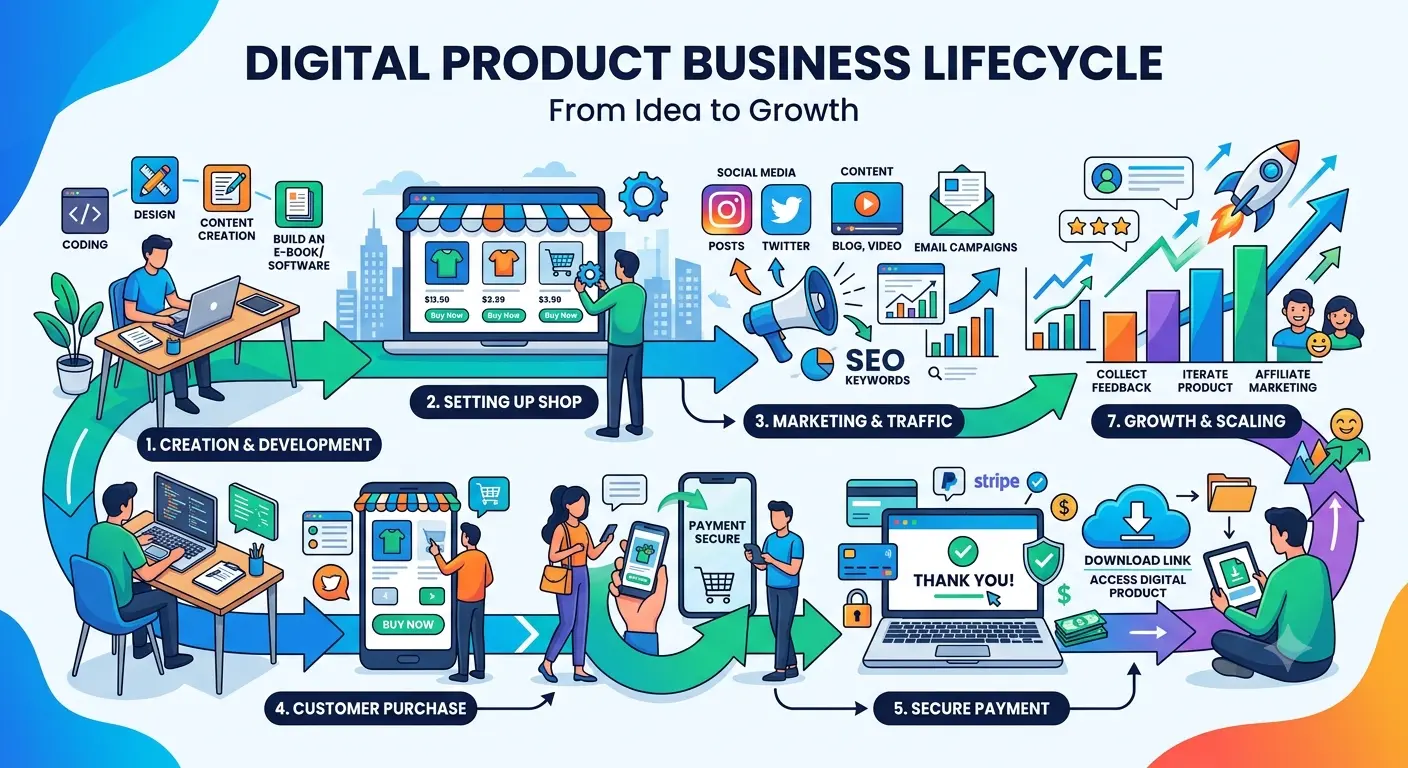
Selling digital products has never been more accessible. From software licenses and online courses to templates and memberships, businesses can serve customers worldwide without inventory or shipping. Long-term success depends on choosing the right products, creating a reliable buying experience, pricing effectively, protecting digital assets, and earning customer trust.
Why Digital Products Continue to Grow
Digital products offer low inventory costs, instant delivery, scalability, automation, and lower operating overhead. Customers can purchase and receive products within minutes from almost anywhere in the world.
What Is a Digital Product Business?
A digital product business sells products delivered electronically, including software licenses, eBooks, templates, courses, memberships, AI tools, cloud software, and digital media.
Choosing the Right Product
Start by solving a real customer problem. Define the audience, identify the problem, explain why your solution is different, and ensure the product provides lasting value.
Evergreen vs Trend-Based Products
Evergreen products solve ongoing problems and require fewer updates. Trend-based products can generate rapid sales but often require continual revisions. A balanced catalogue often works best.
Understanding Your Customers
Understand customer goals, experience level, budget, and frustrations. Customer knowledge improves product development, pricing, marketing, and support.
Building Your Online Store
A professional store should include fast loading pages, mobile-friendly design, secure checkout, clear navigation, detailed product pages, and easy-to-find contact information.
Writing Better Product Pages
Focus on benefits rather than features. Explain who the product is for, what it solves, how delivery works, and what support customers receive.
Building Trust Before the Sale
Use transparent pricing, clear refund policies, FAQs, business contact information, secure checkout, and consistent branding.
Accepting Payments
Choose payment providers based on supported countries, payment methods, fees, settlement times, fraud protection, and support. See KS-011 for detailed payment guidance.
Delivering Digital Products
Customers expect immediate access after payment. Automating downloads, license delivery, and account activation improves customer satisfaction and reduces manual work. See KS-012 for more.
Pricing Your Digital Products
Price according to the value your product delivers rather than simply matching competitors. Review pricing regularly as products evolve. See KS-013 for a detailed comparison of one-time and subscription pricing.
Customer Support Builds Long-Term Trust
Provide prompt replies, clear documentation, FAQs, transparent refund policies, and detailed order confirmations. Excellent support encourages repeat business.
Marketing a Digital Product Business
Build long-term visibility through SEO, email marketing, educational content, affiliate partnerships, and collaborations with complementary businesses.
Protecting Your Digital Business
Use strong passwords, multi-factor authentication, regular updates, secure payment processing, backups, and controlled staff access to protect customers and operations.
Scaling Your Business
Automate fulfilment, email notifications, reporting, analytics, and routine tasks. Automation should improve customer experience, not replace quality support.
Measuring Success
Monitor conversion rates, repeat purchases, average order value, refunds, support requests, and traffic to identify opportunities for improvement.
Common Mistakes
Avoid launching before testing, ignoring customer feedback, creating complicated checkouts, neglecting documentation, and relying on a single traffic source.
Frequently Asked Questions
Small teams can successfully run digital product businesses using automation. International sales, gradual product expansion, and regular updates all support sustainable growth.
Final Thoughts
Successful digital product businesses combine valuable products with secure technology, efficient delivery, transparent communication, thoughtful pricing, and excellent customer support. Focus on solving customer problems and continuously improving the buying experience.
3 thoughts on “The Complete Guide to Running a Digital Product Business in 2026”