
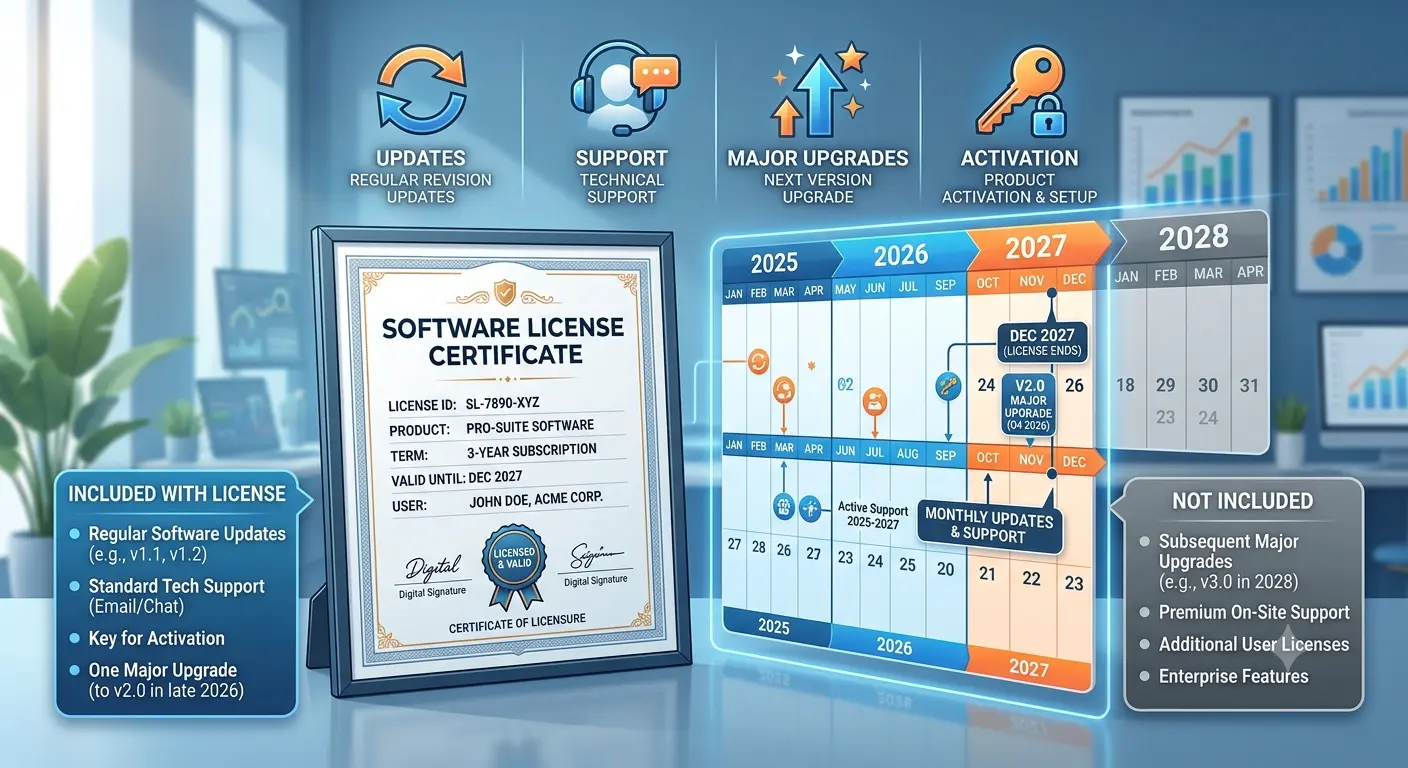
For many buyers, it suggests paying once and using software forever without worrying about recurring subscriptions. While that can sometimes be true, the term “lifetime” is often misunderstood.
A lifetime license does not always mean lifetime updates, lifetime support, or even lifetime access to every future version of the software.
Understanding exactly what a lifetime license includes helps you make better purchasing decisions and avoid unrealistic expectations.
This guide explains what lifetime licenses usually mean, how they differ from subscriptions, and the questions every buyer should ask before making a purchase.
What Is a Lifetime License?
A lifetime license generally allows you to use a product after making a one-time payment instead of paying monthly or annually. You purchase the software once and continue using it according to the publisher’s licensing terms. However, the word ‘lifetime’ refers to the license agreement—not necessarily your lifetime. The exact meaning depends on the software publisher and the terms attached to the license.
Lifetime of What?
This is where confusion begins. A lifetime license may refer to the lifetime of the product, a specific software version, the company, or the licensing program itself. Each definition produces different outcomes for customers. Always read the licensing terms before assuming what ‘lifetime’ covers.
Lifetime Access Doesn’t Always Include Updates
Many buyers believe a lifetime license automatically includes every future version of the software. In reality, publishers often separate software usage, feature updates, major upgrades, and technical support. You may receive unlimited use of Version 1 together with security patches and minor improvements, while Version 2 or Version 3 requires a new purchase. Understanding this distinction prevents disappointment later.
Support May Have Time Limits
Owning a lifetime license does not always mean receiving lifetime customer support. Some publishers provide email support for one year, limited installation assistance, community forums only, or paid premium support. Software usage rights and support policies are often licensed separately.
Lifetime Doesn’t Override Company Changes
Software companies evolve. Products may be renamed, merged, replaced, or discontinued. If a product reaches the end of its life, a lifetime license does not necessarily guarantee continued development. Customers usually retain the rights granted under the original agreement, but future improvements may stop.
Compare Lifetime Licenses With Subscriptions
Both licensing models have advantages. A lifetime license appeals to users who prefer one-time purchases, keep software for years, do not always need the newest features, and want predictable costs. Subscriptions suit users who need continuous updates, cloud services, collaboration tools, and the latest releases. Neither model is universally better; the right choice depends on how you use the software.
Questions to Ask Before Buying
Before purchasing any lifetime license, ask whether future major versions are included, whether updates are free, how long technical support lasts, whether the license can be transferred, how many devices are supported, whether internet activation is required, and whether any renewal fees apply. These questions reveal the true value of the purchase.
Don’t Judge by Price Alone
A lifetime license may seem expensive compared with a single year of a subscription, but the long-term cost can be lower if you intend to use the software for several years. Conversely, subscriptions may provide better value when frequent feature updates are essential. Consider your own usage rather than focusing only on the purchase price.
Common Misunderstandings
‘Lifetime means forever’ is not always correct because the scope depends on the publisher’s agreement. ‘Lifetime includes every future version’ is also often false, as many publishers charge separately for major upgrades. Lifetime ownership does not guarantee unlimited support, and every software publisher defines lifetime licensing differently.
Frequently Asked Questions
Is a lifetime license better than a subscription? It depends on your needs. Can I keep using the software if support ends? In many cases, yes. Do lifetime licenses require internet access? Some require online activation while others work offline. Can lifetime licenses be transferred? Some publishers allow transfers while others restrict activations, so always review the license terms.
Final Thoughts
A lifetime license can provide excellent long-term value when you understand exactly what it includes. Look beyond the word ‘lifetime’ and review the licensing agreement carefully. Consider updates, support, future upgrades, transfer rights, and activation requirements before buying. An informed purchase is always more valuable than choosing a license based solely on marketing language.