
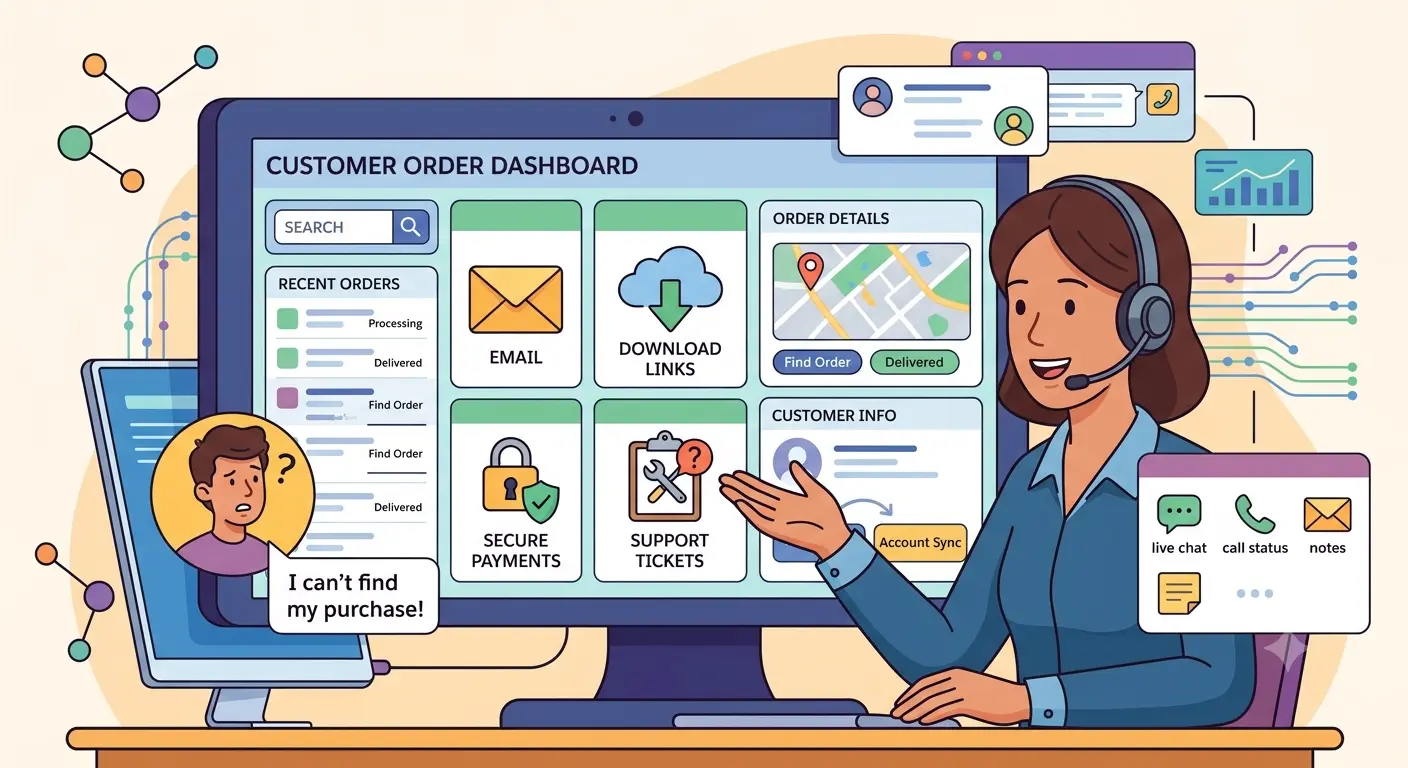
Few support messages create more concern for a digital business than, “I never got my order.”
Unlike physical products, digital goods are often delivered instantly through email, download links, account dashboards, or license keys. When a customer claims they never received their purchase, the problem is usually related to delivery, communication, or access rather than shipping.
Responding correctly protects customer trust while also protecting your business if the issue later becomes a payment dispute.
This guide explains how to investigate these situations, communicate professionally, and reduce the chances of the same problem happening again.
Stay Calm and Respond Quickly
Customers who cannot access a purchase are often frustrated.
Your first response should acknowledge the issue and reassure them that you will investigate.
A simple reply confirming that you are checking the order immediately is usually better than making assumptions or placing blame.
Fast communication often prevents customers from filing disputes with their payment provider before the issue is resolved.
Confirm the Order Details
Before investigating further, verify the order information.
Check:
- Order number
- Customer email address
- Purchase date
- Payment status
- Product purchased
Many “missing order” reports are caused by simple mistakes such as typing the wrong email address during checkout.
Confirming these details first saves time for both parties.
Verify Successful Payment
Not every order reaches the delivery stage.
Sometimes payments remain pending, fail fraud checks, or are declined after authorization.
Confirm that:
- Payment was successfully completed.
- The order was marked as paid.
- Your fulfillment system was triggered correctly.
If payment was never completed, explain the situation clearly before attempting delivery.
Check Delivery Logs
Digital businesses should maintain records showing when products were delivered.
Useful records include:
- Delivery timestamps
- Recipient email address
- Download link generation
- License key assignment
- Account activation logs
Maintaining these records helps investigate customer reports and provides valuable evidence if a payment dispute occurs.
Ask the Customer to Check Common Issues
Ask the customer to check spam folders, promotions, alternative email addresses, their account dashboard, and order confirmations before assuming delivery failed.
Offer a Safe Way to Re-Access the Product
Provide a fresh download link, dashboard access, license retrieval, password reset, or resend the confirmation email where appropriate.
Investigate Technical Problems
Review email delivery failures, automation issues, plugin errors, inventory shortages, and server outages.
Keep Accurate Support Records
Document customer emails, support tickets, screenshots, delivery attempts, and resolutions.
Know When to Escalate
Escalate suspected fraud, payment disputes, repeated claims, or account security concerns.
Learn From Every Incident
Improve delivery emails, notifications, monitoring, and backup access methods whenever recurring issues appear.
Prevent “Missing Order” Complaints
Use instant confirmations, branded sender addresses, download history, delivery notifications, and clear setup instructions.
Common Mistakes
Assuming the Customer Is Wrong
Treat every report professionally.
Responding Too Slowly
Delayed responses increase the likelihood of disputes.
Lacking Delivery Evidence
Maintain delivery logs and fulfillment records.
Making Manual Processes Permanent
Automate recurring fixes whenever possible.
Frequently Asked Questions
Should I resend the product immediately?
After verifying payment and customer identity, resending access is often the fastest solution.
What if the customer enters the wrong email address?
Verify ownership before updating the address and resending.
Can delivery records help with payment disputes?
Yes. Electronic delivery records can support your case.
How often should I test my delivery system?
Regularly, especially after updates.
Final Thoughts
Most missing-order reports result from communication or technical issues rather than fraud. Respond quickly, maintain accurate records, improve delivery systems, and communicate clearly to build customer trust.