
Software licensing has changed significantly over the years. Buyers now commonly choose between perpetual licenses, which require a one-time purchase, and subscription licenses, which provide ongoing access through recurring payments.
What Is a Perpetual License?
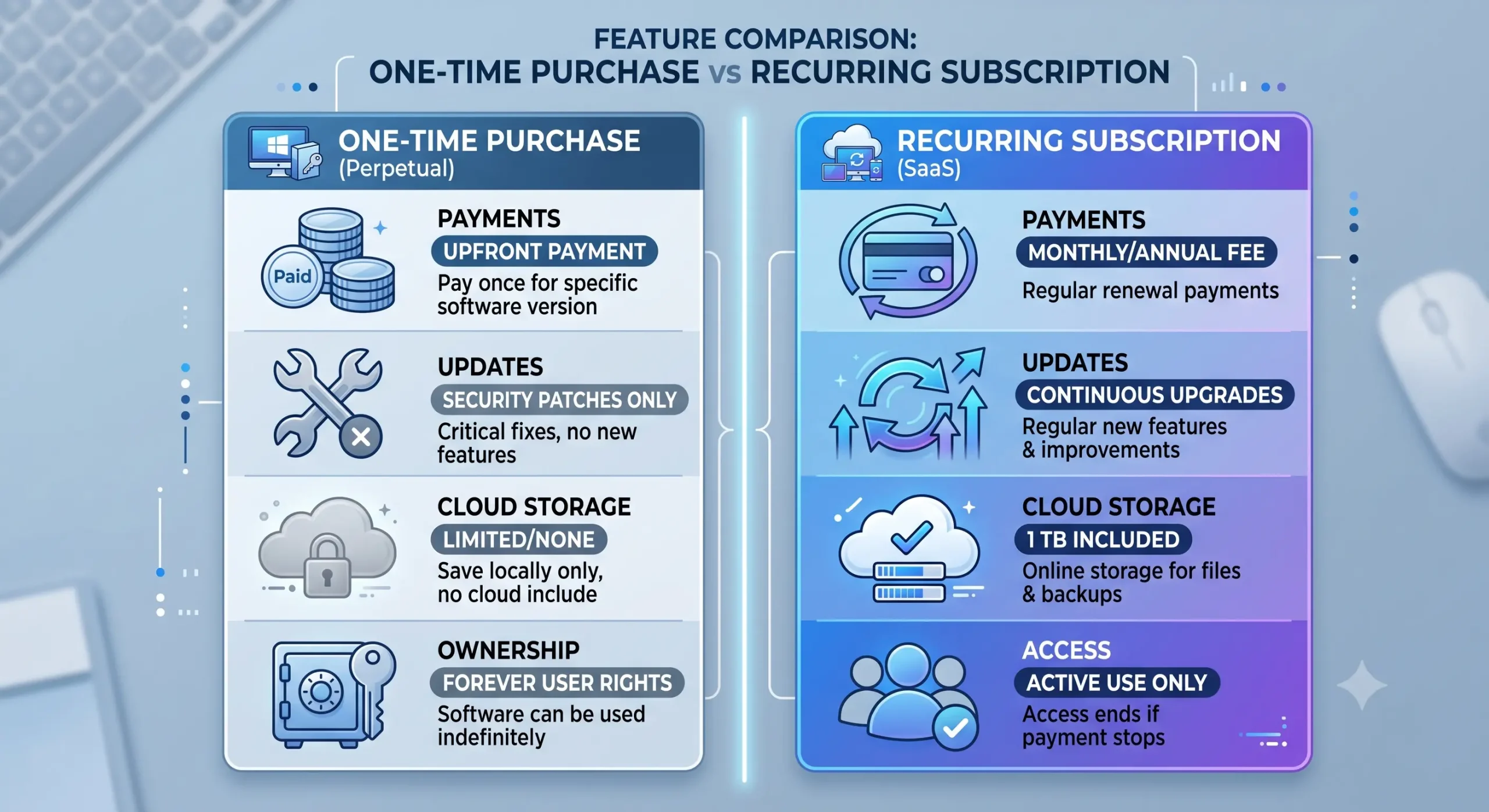
A perpetual license allows you to use a specific version of software indefinitely after a one-time purchase. It generally includes security updates and bug fixes but not major future feature releases.
Examples include:
• Microsoft Office 2021
• Older standalone creative software
• Various desktop productivity applications
What Is a Subscription License?
A subscription license provides access to software while your subscription remains active. Popular examples include Microsoft 365, Adobe Creative Cloud, Canva Pro, and Grammarly Premium.
Subscribers typically receive:
• Continuous feature updates
• Security improvements
• Cloud services
• Technical support
• Access to the latest version
Key Differences
Perpetual:
• One-time purchase
• Long-term use of one version
• Limited feature upgrades
Subscription:
• Monthly or annual payments
• Continuous improvements
• Cloud storage and collaboration
• Latest features
Cost Comparison
Perpetual licenses require a higher upfront investment but no recurring payments. Subscription software spreads costs over time and often includes additional online services.
Who Should Choose Perpetual?
• Users who prefer predictable costs.
• People who rarely need the latest features.
• Those primarily working offline.
Who Should Choose Subscription?
• Users who want the newest features.
• Businesses requiring collaboration tools.
• People working across multiple devices.
Common Misconceptions
• Perpetual software still receives security updates during its support lifecycle.
• Subscription software is not automatically more expensive because it often includes additional services.
• Neither licensing model is universally better.
Final Thoughts
The right licensing model depends on your workflow, budget, and long-term plans. Perpetual licenses suit users who prefer one-time purchases, while subscriptions benefit users who value continuous updates and cloud-based services.
6 thoughts on “Perpetual vs Subscription Software: Which Licensing Model Makes More Sense?”