
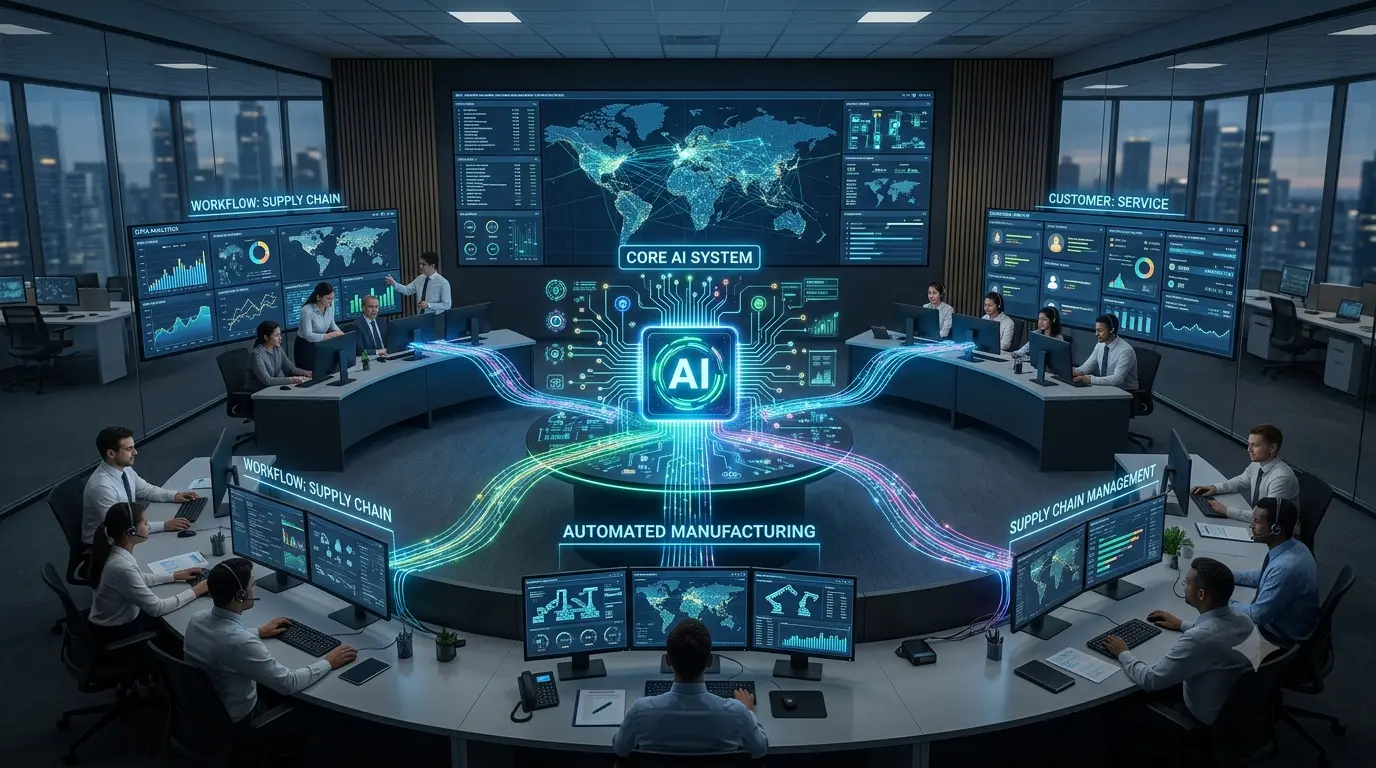
One of the biggest changes in modern AI is the ability to handle more than one type of task.
AI assistants can answer questions, analyze documents, write content, create images, help with code, and summarize information.
AI multitasking works differently from human multitasking.
What Does AI Multitasking Mean?
AI multitasking refers to an AI system’s ability to perform different types of tasks using the same underlying model.
Modern AI models learn general patterns from large amounts of data and can adapt those abilities to different situations.
How AI Can Do Different Things With One Model
AI models learn patterns in:
– Language.
– Information.
– Relationships.
– Instructions.
The same model can help with writing, explanations, summaries, product descriptions, analysis, and programming.
AI Multitasking vs Human Multitasking
Humans switch attention between activities.
AI systems process requests through mathematical operations.
AI does not have human awareness, priorities, or feelings of being busy.
Single Model, Multiple Abilities
General-purpose AI models can support:
– Writing.
– Analysis.
– Programming.
– Creative work.
How Multitask AI Models Are Trained
Large AI models are trained on diverse datasets including:
– Books.
– Websites.
– Code.
– Articles.
– Images.
– Digital content.
The model learns patterns across different domains.
Why AI Multitasking Has Limits
General ability does not mean perfect ability.
AI may struggle with:
– Highly specialized work.
– Real-time information.
– Tasks requiring physical experience.
How AI Handles Multiple Tasks in Practice
AI systems can handle requests that involve:
– Understanding language.
– Extracting information.
– Organizing ideas.
– Generating responses.
The AI is not running several independent minds.
It applies learned capabilities to different problems.
Multimodal Multitasking
Modern AI assistants can work with:
– Text.
– Images.
– Audio.
– Video.
– Documents.
They can combine different inputs to create responses.
AI Multitasking and AI Agents
AI agents can manage workflows involving several actions.
Example:
– Collect data.
– Analyze performance.
– Create charts.
– Write summaries.
– Prepare documents.
Why AI Multitasking Is Useful for Businesses
Businesses can use AI for:
– Marketing.
– Customer support.
– Software development.
Does AI Really Do Multiple Things at Once?
Not exactly.
AI systems handle many requests through computing systems and repeated model operations.
The AI does not experience multiple tasks simultaneously.
General AI vs Specialized AI
General AI provides flexibility.
Specialized tools provide depth.
Dedicated systems may outperform general AI in narrow areas.
The Challenges of AI Multitasking
Challenges include:
– Quality control.
– Context management.
– Resource usage.
The Future of AI Multitasking
Future AI systems may combine:
– Memory.
– Reasoning.
– Multimodal abilities.
– Tools.
– Agents.
The Practical Takeaway
AI multitasking means a single AI system can apply different skills across different tasks. The most useful AI systems will connect capabilities together and help people complete work more efficiently.