
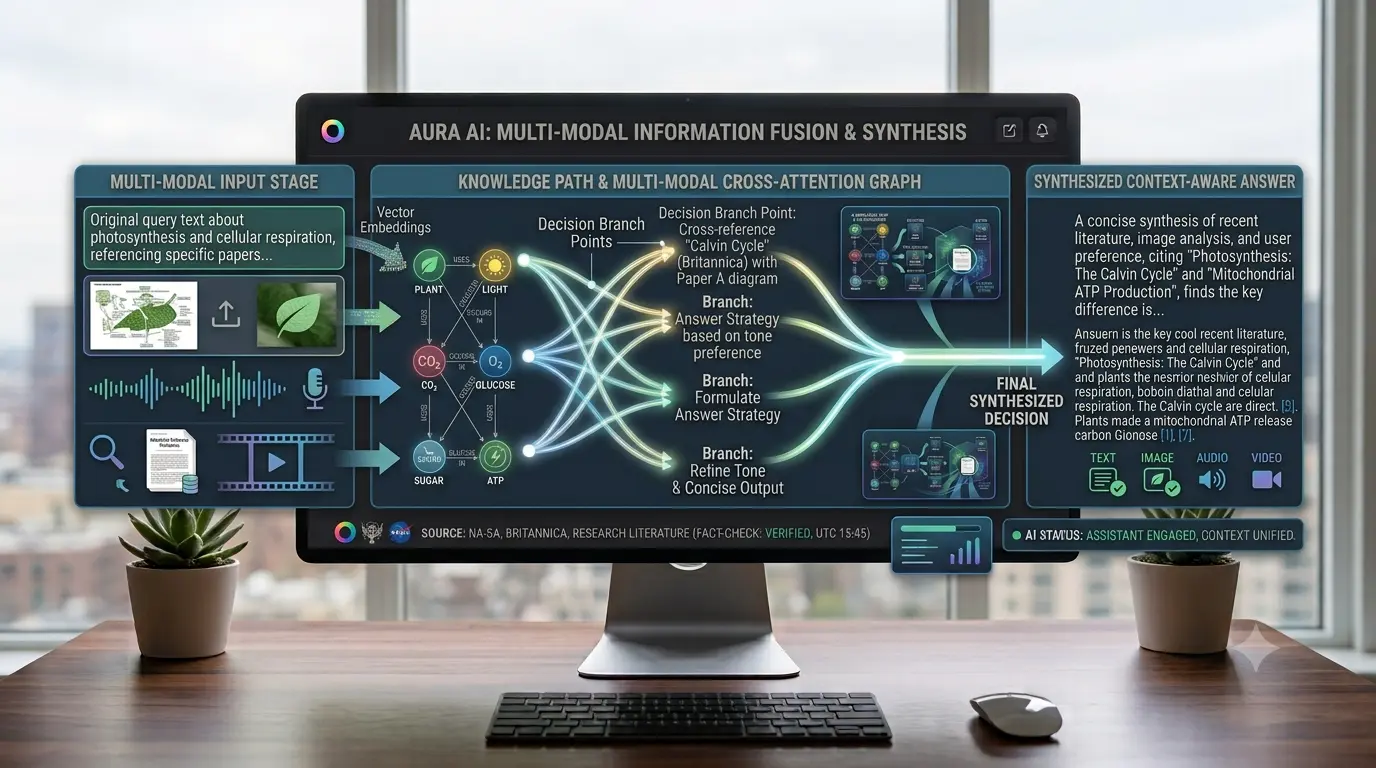
For years, most people experienced artificial intelligence through text.
Modern AI systems are moving beyond text and can work with images, audio, video, documents, code, and real-world information.
This ability is called multimodal AI.
Multimodal AI allows a model to understand and work with different types of information instead of only text.
What Does Multimodal AI Mean?
The word modal refers to a type of information.
A modality can be:
– Text.
– Images.
– Sound.
– Video.
– Data.
A text-only AI model works mainly with written language.
A multimodal AI model can process multiple types of input.
Why Multimodal AI Matters
The real world is not made of text.
Humans understand situations using multiple senses.
Multimodal systems attempt to bring these abilities together.
How Multimodal AI Works
Different types of information are converted into formats the AI model can process.
Text becomes tokens.
Images become mathematical representations.
Audio becomes data patterns.
Video combines frames and audio information.
Examples of Multimodal AI
Understanding images:
AI can analyze screenshots, photos, and visual information.
Document analysis:
AI can understand text, charts, tables, and layouts together.
Voice assistants:
AI can combine speech recognition, language understanding, and voice generation.
Video understanding:
AI can analyze images, movement, and sound.
Multimodal AI vs Traditional AI
Traditional text AI:
Input: Written question
Output: Written answer
Multimodal AI:
Input: Text, images, audio, documents
Output: Text, voice, actions, or analysis
Why Multimodal AI Helps Solve Real Problems
Many real tasks require more than text.
A technician may need photos, manuals, spoken explanations, and repair records.
Multimodal AI can combine these sources.
How Multimodal AI Is Changing Everyday AI Tools
Users can provide information naturally through:
– Screenshots.
– Photos.
– Voice messages.
– Documents.
The AI can combine these inputs to understand the situation.
Examples of Real-World Uses
Technical support:
AI can read error messages from screenshots and suggest troubleshooting steps.
Learning and education:
Students can upload diagrams, math problems, and research papers.
Business documents:
AI can analyze reports containing text, tables, and charts.
Creative work:
Designers can use AI for reviewing images, concepts, and presentations.
Multimodal AI and Large Language Models
Modern AI systems are no longer limited to text.
Many advanced models process multiple types of information using different components.
How AI Learns From Different Types of Data
During training, multimodal AI learns relationships between different information types.
It connects images, words, descriptions, and concepts.
This does not mean AI sees like humans. It identifies patterns in data.
Multimodal AI and AI Agents
When combined with AI agents, multimodal systems can:
– Read documents.
– Analyze images.
– Listen to instructions.
– Understand screenshots.
– Take actions based on information.
The Challenges of Multimodal AI
Accuracy problems:
AI can misunderstand images, handwriting, diagrams, or audio.
Privacy concerns:
Images and audio may contain sensitive information.
Computing requirements:
Processing multiple data types requires more resources.
Does Multimodal AI Understand Like Humans?
No.
AI identifies patterns in data. It does not have human experiences or awareness.
The Future of Multimodal AI
Multimodal AI will likely become a standard way people interact with computers.
Users may show problems through images, explain tasks through voice, and share documents directly.
The Practical Takeaway
Multimodal AI expands artificial intelligence beyond text.
It allows systems to work with images, audio, video, and documents together.
The shift is from:
“Tell AI what you see.” To:
“Show AI what you need help with.”