Most people have interacted with AI through a chatbot.
You ask a question. The AI responds.
A newer type of AI system works differently. It is called an AI agent.
Instead of only answering questions, an AI agent can take a goal, plan steps, use tools, and complete tasks with less direct guidance.
Chatbots answer.
Agents act.
What Is an AI Agent?
An AI agent is a system that can:
– Understand a goal.
– Break it into smaller tasks.
– Decide what actions to take.
– Use tools or software.
– Check results.
– Adjust its approach.
A chatbot mainly generates responses. An agent creates a process.
Chatbots vs AI Agents
Traditional chatbot:
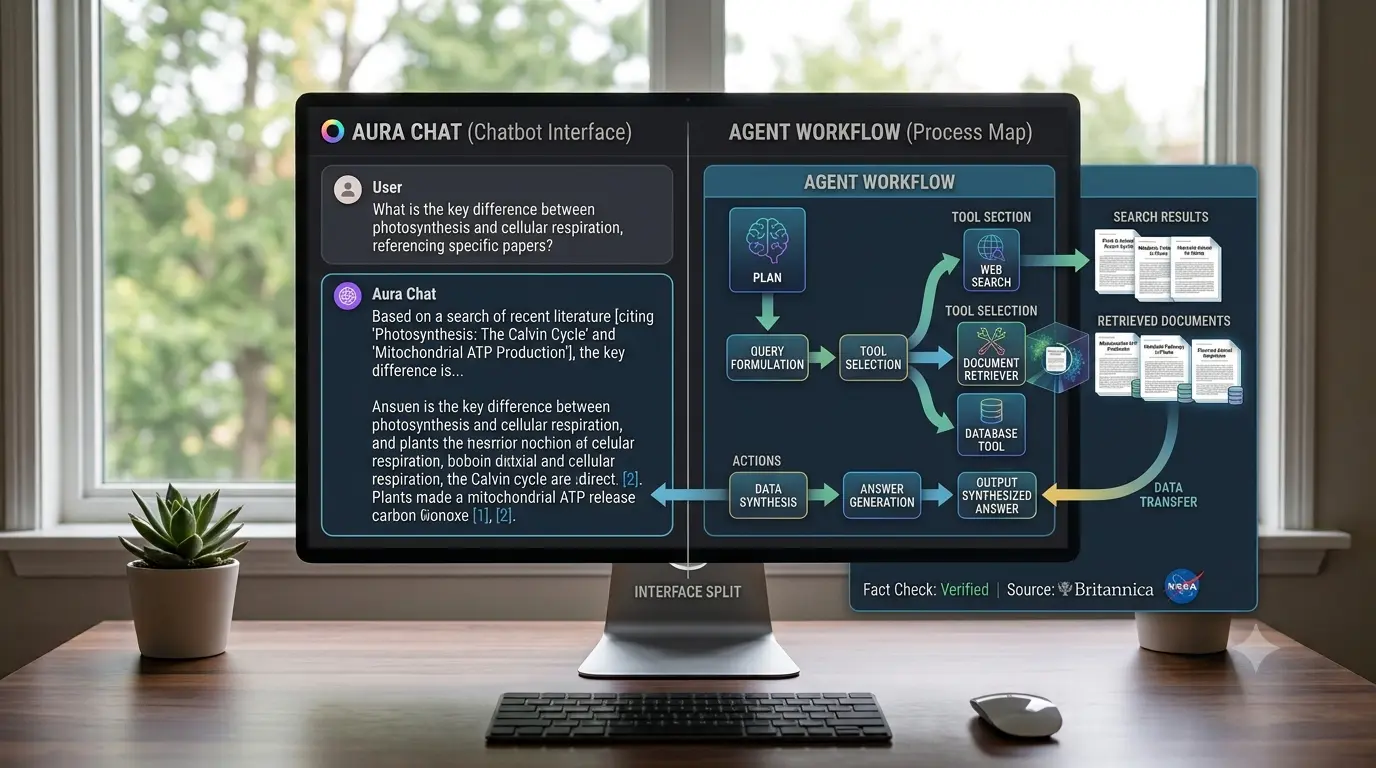
Input → User question → Generate answer → Text response
AI agent:
Input → User goal → Plan → Execute → Check → Adjust → Result
The agent can perform multiple steps before responding.
Why AI Agents Are Becoming Popular
Many real tasks require multiple actions:
– Finding information.
– Updating records.
– Sending messages.
– Analyzing data.
– Creating documents.
– Monitoring systems.
Agents combine language models with tools and decision-making systems.
The Main Components of an AI Agent
1. The AI Model
The language model helps the agent understand instructions and decide next steps.
2. Memory
Memory allows agents to maintain context through previous interactions, preferences, and task history.
3. Tools
Tools allow agents to interact with external systems:
– Search engines.
– Databases.
– APIs.
– Calendars.
– Email systems.
– Code execution.
4. Planning Ability
Agents decide what steps are required to complete a goal.
How an AI Agent Completes a Task
A typical workflow:
1. Receive a goal.
2. Understand the goal.
3. Choose actions.
4. Execute actions.
5. Review results.
Examples of AI Agents
AI agents can be used for:
Personal productivity:
– Reviewing calendars.
– Planning schedules.
– Managing priorities.
Customer support:
– Verifying customers.
– Checking orders.
– Updating information.
Coding:
– Reading project files.
– Identifying issues.
– Modifying code.
– Running tests.
AI Agents and Tools
Tools allow AI agents to interact with external systems.
Examples:
– Web search.
– APIs.
– Code execution.
– File access.
Tools turn AI from a text generator into a system that can perform actions.
Why AI Agents Need Guardrails
Agents can create bigger risks because they can take actions.
Important safeguards include:
– Permission limits.
– Human approval steps.
– Activity logs.
– Restricted access.
– Clear instructions.
Are AI Agents Fully Autonomous?
Most current AI agents are not completely independent.
They usually need:
– Clear goals.
– Available tools.
– Defined permissions.
– Human oversight.
Traditional automation follows fixed rules.
AI agents can interpret goals and handle more uncertainty.
The Challenges With AI Agents
Limitations include:
– Wrong decisions.
– Incorrect tool usage.
– Higher costs.
– Need for clear instructions.
The Future of AI Agents
AI agents are likely to become more common in:
– Research.
– Software development.
– Business operations.
– Personal productivity.
– Customer service.
The Practical Takeaway
Chatbots answer questions.
AI agents work toward goals.
The difference is the ability to plan, use tools, and take action. The most useful agents will solve specific problems, have clear boundaries, and operate with human oversight.