
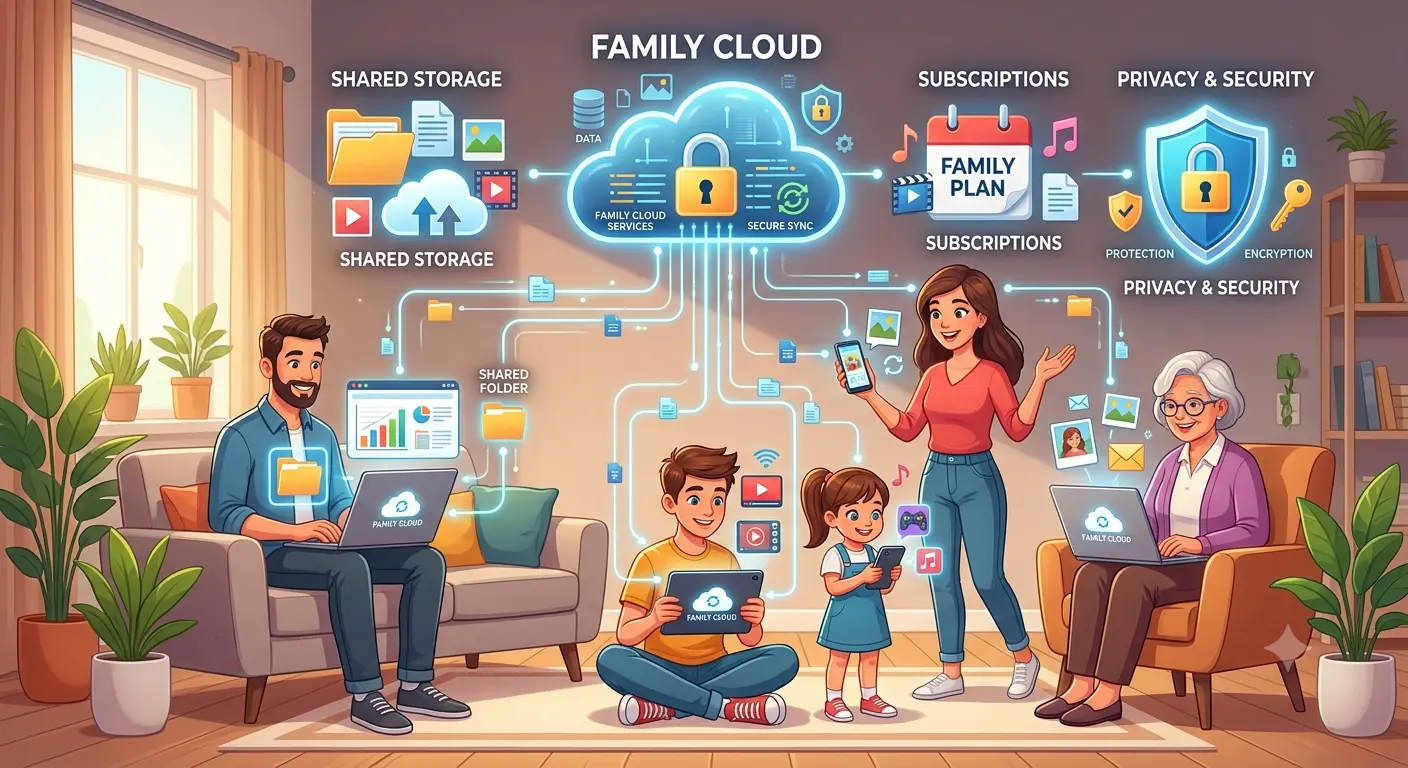
Subscription services have become a normal part of everyday life. Many households now pay monthly or yearly for cloud storage, streaming services, productivity software, password managers, AI tools, and security applications.
To make subscriptions more attractive, many providers offer family plans that allow multiple people to use the same subscription. While these plans can save money, they also create confusion.
Can you share with relatives who live elsewhere? Can friends use your family plan? What happens if someone leaves the family group?
The answers depend entirely on the provider’s terms of service.
This guide explains how family subscriptions generally work, what is commonly allowed, and how to avoid accidentally violating subscription rules.
What Is a Family Subscription?
A family subscription allows several people to access one paid plan instead of purchasing separate subscriptions.
Rather than paying individually, family members share the same subscription while keeping their own personal accounts.
Many providers include:
• Individual user profiles
• Separate personal data
• Shared billing
• Family management tools
• Storage sharing
• Purchase controls
Although features vary, the goal is to reduce costs while maintaining privacy between family members.
Why Companies Offer Family Plans
Family plans benefit both customers and software companies.
Customers save money compared to purchasing multiple individual subscriptions.
Providers benefit because families remain subscribed longer, account management becomes simpler, customers are less likely to switch services, and additional users become familiar with the platform. Family subscriptions encourage long-term customer relationships rather than one-time purchases.
Read the Terms Carefully
Not every family subscription follows the same rules. Some providers define a family as people living in the same household, while others simply require members to belong to the same family group regardless of address.
Before inviting additional users, review household requirements, maximum number of users, country restrictions, age requirements, and administrator permissions. Assuming all providers work the same way often leads to account problems later.
Can Friends Share a Family Plan?
Many people wonder whether they can reduce costs by sharing subscriptions with friends. Whether this is allowed depends on the provider. Some companies specifically state that family plans are intended only for members of the same household or family, while others are less restrictive. Instead of relying on online discussions, always follow the subscription terms provided by the service. Violating those terms could result in account restrictions or the loss of shared benefits.
What Can Family Organizers Do?
Most family subscriptions include one account responsible for managing the group. The organizer can often add or remove members, manage billing, upgrade plans, view shared storage usage, and configure parental controls. The organizer should understand these responsibilities before inviting others.
What Remains Private?
Sharing a subscription does not necessarily mean sharing personal information. Most modern family plans keep personal files, emails, documents, photos, passwords, and application settings separate. However, some information such as shared storage usage or purchase history may be visible to the family organizer depending on the provider. Always understand which information remains private before joining a shared plan.
When Family Plans Make Sense
Family subscriptions work well for parents and children, couples, households with multiple devices, and small families using the same ecosystem. Sharing one subscription often reduces overall costs while simplifying account management.
Common Mistakes
Every family subscription has a user limit, so exceeding that limit may require upgrading the plan. Using a family subscription outside the permitted conditions can lead to warnings or account restrictions. Never share the primary account password; invite members through the provider’s family management system instead. Review shared settings regularly to ensure each family member has the appropriate level of access.
Security Tips for Shared Subscriptions
Family plans should still follow good security practices. Every member should use a strong password, enable multi-factor authentication, keep recovery information updated, avoid sharing login credentials, and remove inactive members when necessary. Security protects everyone using the subscription.
Frequently Asked Questions
Can family members have separate passwords?
Yes. Most providers give every member an independent account protected by their own password.
Can someone leave a family subscription?
Usually. Most services allow members to leave or be removed by the family organizer.
Does everyone share files?
Not necessarily. Many family plans separate personal files while sharing only subscription benefits.
Are family plans always cheaper?
For households with several users, family subscriptions often provide better value than purchasing multiple individual plans.
Final Thoughts
Family subscriptions provide an excellent way to reduce software and service costs while allowing multiple people to enjoy premium features. However, every provider defines ‘family’ differently. Before inviting others to join your subscription, understand the rules, review privacy settings, and follow the provider’s terms. Doing so helps protect your account while ensuring everyone enjoys the benefits without unexpected interruptions.