
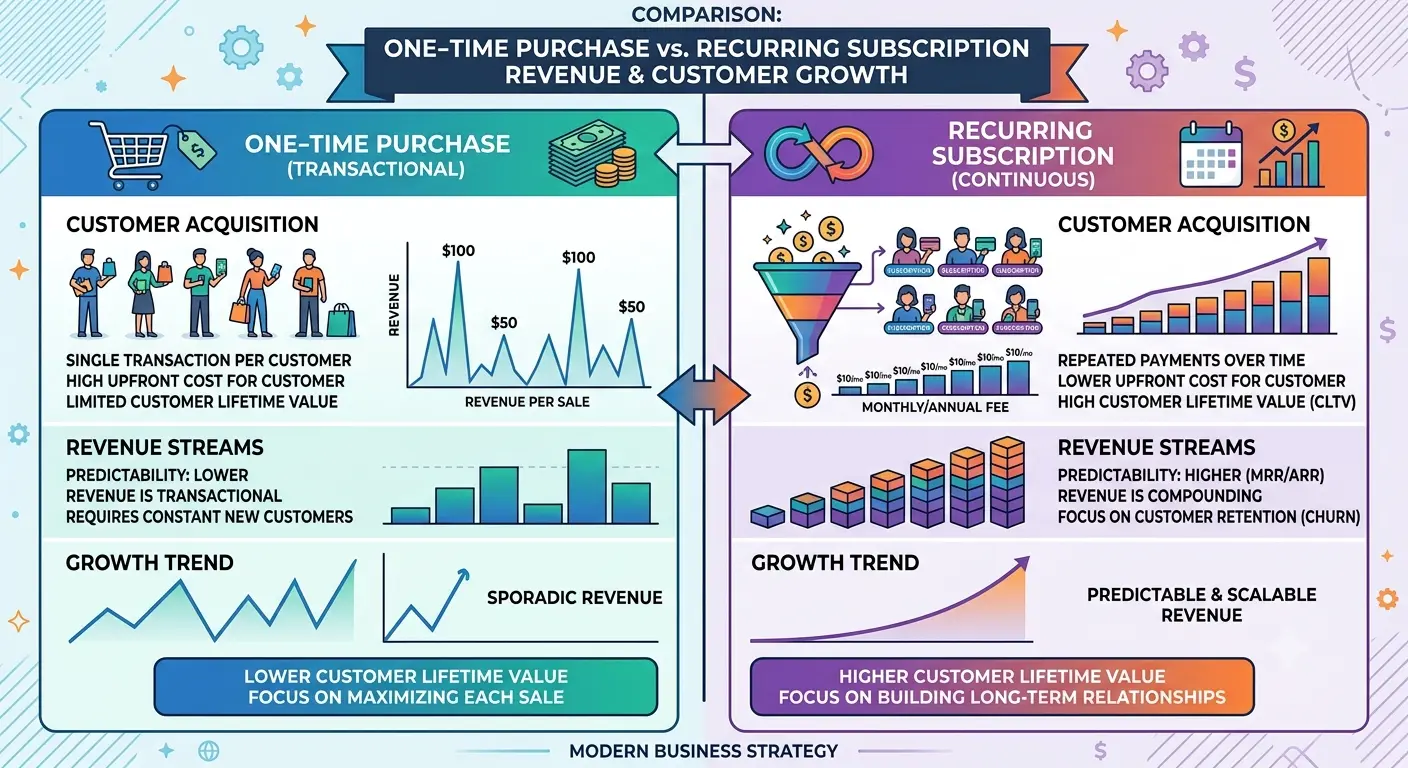
Pricing influences revenue, customer expectations, and long-term business growth. Most digital businesses choose between one-time purchases and subscription pricing.
Understanding One-Time Pricing
Customers pay once and receive ongoing access to the purchased product. Common examples include desktop software, eBooks, templates, downloadable courses, and digital artwork.
Advantages include:
• One-time payment
• No recurring bills
• Easier budgeting
• Higher upfront revenue
• Less subscription fatigue
Understanding Subscription Pricing
Customers pay monthly or annually for continued access to a product or service. Examples include cloud software, AI tools, streaming services, memberships, and productivity platforms.
Advantages include:
• Predictable recurring revenue
• Stronger customer relationships
• Continuous product improvements
• Higher customer lifetime value
Choosing the Right Model
One-time pricing often works well for standalone products that require little ongoing development.
Subscription pricing is generally better for products that continuously evolve or provide ongoing services.
Hybrid Pricing
Many businesses combine both models by offering lifetime licenses, optional maintenance plans, premium memberships, or cloud services alongside perpetual products.
Common Mistakes
• Choosing subscriptions without delivering ongoing value
• Undervaluing one-time products
• Copying competitors without understanding customer needs
• Ignoring customer feedback
Final Thoughts
There is no universal pricing model. The best choice depends on your product, customers, business goals, and the value you continue providing after the sale.
3 thoughts on “Subscription vs One-Time Pricing: Which Model Fits Your Digital Product?”