
Selling digital products allows even small businesses to reach customers worldwide, but accepting international payments requires careful planning.
Why International Payments Matter
• Reach global customers
• Increase revenue opportunities
• Sell 24/7
• Expand without overseas offices
How International Payments Work
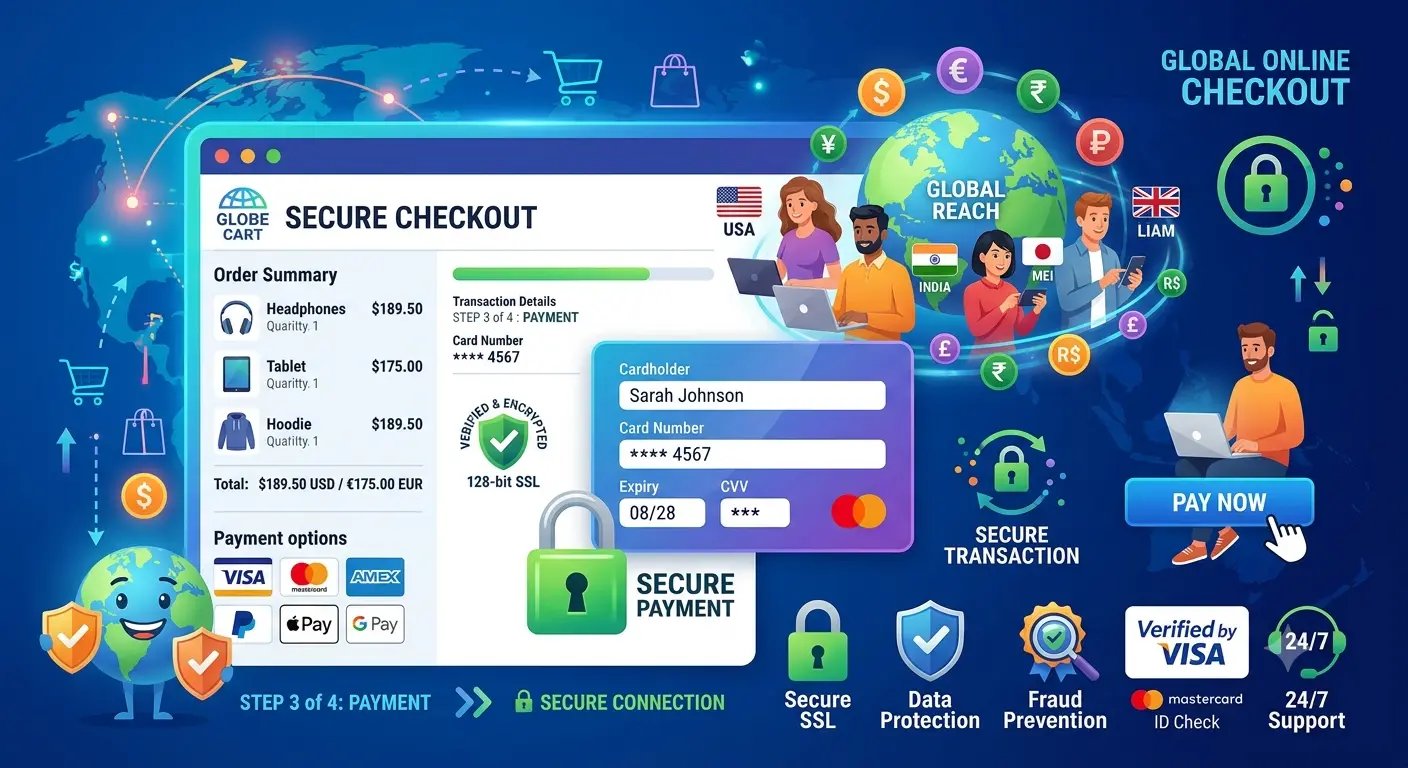
Payment gateways securely transmit payment information, processors communicate with financial networks, and funds are settled into your merchant account.
Common Payment Methods
• Credit and debit cards
• Digital wallets
• Bank transfers
• Regional payment methods
• Buy Now, Pay Later services
Choosing a Payment Provider
Compare supported countries, payment methods, fees, settlement times, fraud protection, chargeback tools, platform compatibility, and customer support.
Security and Chargebacks
Use modern fraud prevention features such as CVV verification, address verification, and 3D Secure. Clear product descriptions and responsive customer support help reduce disputes.
Digital Product Delivery
Customers expect instant access after payment. Automated delivery improves customer satisfaction and reduces manual work.
Taxes and Compliance
International sales may create tax obligations depending on your business and customer locations. Maintain accurate records and seek professional advice when needed.
Final Thoughts
A reliable international payment system helps small businesses build trust, improve conversions, and successfully sell to customers worldwide.
2 thoughts on “How to Accept International Payments as a Small Online Seller”